Butterflies capture attention with their colorful wings and graceful flight. Yet behind that beauty lies a set of remarkable survival strategies. Scientists group butterflies and moths under the order Lepidoptera. Over millions of years, these insects developed traits that allow them to avoid predators, adapt to changing environments, and continue their life cycle.
Understanding Lepidoptera adaptations helps explain how butterflies survive in forests, grasslands, and even urban gardens. Their bodies, behaviors, and life stages all play a role in survival. Each adaptation increases the chances that the species will live long enough to reproduce and continue its lineage.
Below are seven fascinating adaptations that help butterflies thrive in the natural world.
Camouflage That Blends with the Environment
One of the most effective survival strategies in nature is camouflage. Many butterflies rely on wing patterns that allow them to blend into their surroundings. When a butterfly rests on tree bark, dry leaves, or soil, its wings often mimic the colors and textures of those surfaces.
Some species close their wings when they land. The underside of the wings can often look dull and leaf-like. This makes the butterfly difficult for predators to detect. Birds and lizards may pass by without noticing.
The Dead Leaf Butterfly (Kallima inachus) offers a striking example. When it folds its wings, it looks almost identical to a dry leaf, complete with a leaf-like wing shape, patterns that resemble veins and stems, and splotch marks that look like mold on the leaf. This simple trick reduces the chance of being eaten.
Camouflage works best when the butterfly stays still. By remaining motionless and blending with the environment, it becomes nearly invisible.
Warning Colors That Signal Danger
While some butterflies hide, others use bright colors to send a clear message: “Do not eat me.” This strategy is known as warning coloration, known as “aposematism” to scientists.
Butterflies such as the Monarch butterfly (Danaus plexippus) display bold orange and black patterns. These colors warn predators that the insect tastes bad or may be toxic. Birds quickly learn to associate those bright colors with unpleasant experiences.
This defense comes from chemicals that butterflies store in their bodies. Monarch caterpillars feed on milkweed plants, which contain toxins. The caterpillars consume these chemicals and keep them through adulthood. When a predator eats one, the toxins cause nausea. After that experience, predators learn to avoid butterflies with similar patterns. This is why Monarch butterfly caterpillars are striped, and adults are bright orange. These patterns and colors make them easily recognizable to predators.
This adaptation protects not only individual butterflies but also the entire species. Once predators recognize the warning colors, they often avoid attacking any butterfly with that pattern.
Mimicry That Tricks Predators
Nature sometimes adds another clever twist to survival. Some butterflies imitate the appearance of toxic species even though they are harmless. This strategy is called mimicry.
A harmless butterfly that looks like a toxic one gains protection without producing toxins itself. Predators avoid it because they believe it offers the same level of defense. This is called “Batesian Mimicry.”
The Viceroy butterfly (Limenitis archippus) provides a well-known example. It resembles the Monarch butterfly so closely that many predators cannot tell the difference. Because birds already avoid Monarchs, the Viceroy gains safety through imitation.
Another form of mimicry is called Müllerian mimicry. This occurs when two or more chemically defended species—such as the Monarch and Soldier butterflies—evolve to resemble one another. Because both species are unpalatable to predators, sharing a similar warning appearance reinforces the signal that they are harmful or distasteful. As a result, predators learn to avoid this shared pattern more quickly, increasing the survival of all species involved.
Mimicry shows how evolution shapes appearance. Even small changes in wing patterns can improve survival if they confuse predators.
Protective Wing Scales
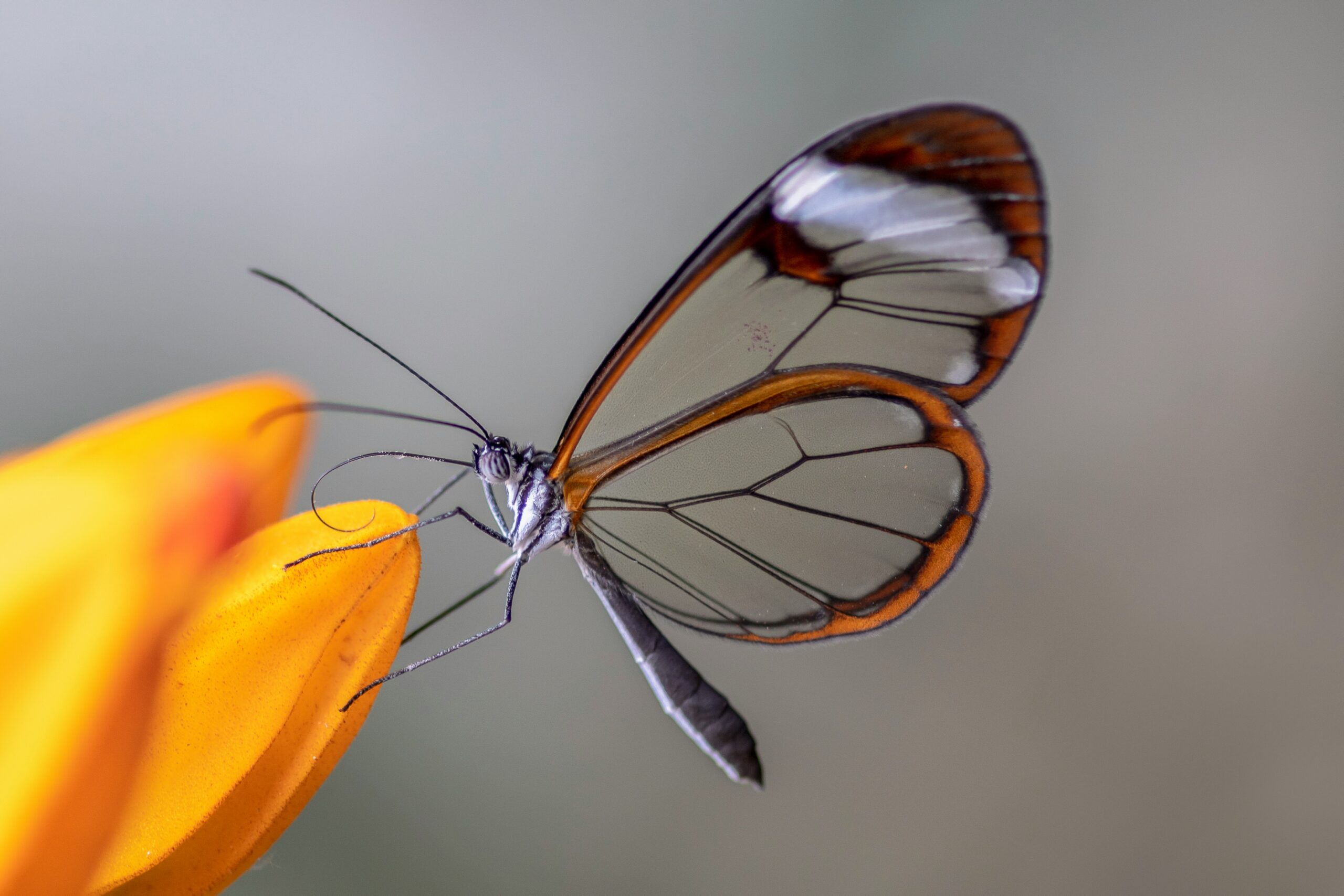
Butterfly wings may appear delicate, but they have a unique structure that supports survival. Their wings are covered with tiny scales. In fact, the name “Lepidoptera” means “scale-winged.”
The microscopic scales that cover the butterfly’s body create the colors and patterns seen on butterfly wings. They also provide protection. If a predator grabs the butterfly, some scales may rub off easily. This allows the butterfly to slip away while the predator ends up with a mouthful of scales instead of a full meal.
Scales also help with temperature control. Butterflies are cold-blooded animals, which means their body temperature depends on the environment. Dark scales absorb sunlight and warm the body. This allows butterflies to become active in cooler conditions.
Without scales, flight and survival would become much more difficult.
Chemical Defense from Host Plants
Many butterflies rely on chemistry for protection. Their defense begins during the caterpillar stage.
Caterpillars feed on specific plants known as host plants. Some of these plants contain toxic chemicals. Instead of being harmed, some caterpillars have the ability to store those toxins in their bodies.
When the caterpillar transforms into a butterfly, the toxins often remain. This chemical shield discourages predators from attacking.
Milkweed plants provide a classic example. Monarch caterpillars consume milkweed leaves and store the plant’s toxins. Those toxins stay in the butterfly’s body after metamorphosis.
This relationship between insects and plants shows how ecosystems work together. The plant provides food, and the butterfly gains protection.
Seasonal Migration for Survival
Some butterflies travel long distances to survive seasonal changes. Migration allows them to escape harsh weather and find better resources.
The Monarch butterfly performs one of the most famous migrations in the insect world. Each year, millions of monarch butterflies travel thousands of kilometers across North America south to Mexico, where they overwinter in the mountains.
This journey requires energy reserves and precise navigation. Scientists believe monarch butterflies use the sun and Earth’s magnetic field to guide their route. Recent scientific research is focusing on using microchips attached to butterflies to monitor how Monarch butterflies fly south.
Migration also ensures that butterflies reach areas where host plants grow. Without access to those plants, the next generation could not survive.
This adaptation allows butterflies to thrive even in regions with extreme seasonal changes.
Metamorphosis as a Survival Strategy
One of the most remarkable traits of butterflies is their life cycle. Butterflies undergo complete metamorphosis, which includes four stages: egg, larva (caterpillar), pupa (chrysalis), and adult.
Each stage serves a different purpose. The caterpillar stage focuses on growth and feeding. The caterpillar eats and stores energy for the next stage.
During the chrysalis stage, the body undergoes a complete transformation. Tissues reorganize to form wings, antennae, and other adult features.
This transformation reduces competition between life stages. Caterpillars and butterflies eat different foods and occupy different ecological roles. Because of this separation, young and adult butterflies do not compete for the same resources, and it allows adult butterflies to fly away to find new areas to occupy.
Metamorphosis also confuses predators. A predator that specializes in eating caterpillars may not recognize the adult butterfly as the same species.
Behavioral Defenses and Flight Patterns
Butterflies also rely on behavior to avoid danger. Many species use unpredictable flight patterns when escaping predators.
Instead of flying in a straight line, a butterfly may zigzag, speed up, or change direction quickly. This movement makes it harder for birds to catch them.
Some butterflies also carefully choose their resting spots. They may perch under leaves or high in tree branches where predators rarely search.
Others fly during specific times of the day when predators are less active. These small behavioral choices can make a big difference in survival.
Why Lepidoptera Adaptations Matter
The survival of butterflies depends on a combination of physical traits, behaviors, and life cycle strategies. Each adaptation improves the odds of survival in a world full of predators and environmental challenges.
Camouflage hides butterflies from danger. Bright colors warn predators to stay away. Mimicry tricks enemies into making mistakes. Chemical defenses and plant relationships add another layer of protection. Migration and metamorphosis enable butterflies to survive across seasons and environments.
These adaptations also show how evolution shapes living organisms. Over countless generations, small advantages become powerful survival tools.
Butterflies may appear fragile, but their survival strategies reveal a different story. They are among the most adaptable insects on Earth.
Frequently Asked Questions (FAQ)
What are Lepidoptera’s adaptations?
Lepidoptera adaptations are traits that help butterflies and moths survive. These include camouflage, warning colors, chemical defenses, migration, and unique wing structures.
Why do butterflies have colorful wings?
Bright colors can serve several purposes. Some butterflies use color to attract mates, while others use it as a warning signal to predators that they are toxic or unpalatable. Some butterflies use color to control their body temperature.
How does camouflage help butterflies survive?
Camouflage allows butterflies to blend into their surroundings. When they rest on leaves or bark, their wings blend into the natural textures, making them difficult for predators to detect.
Do all butterflies migrate?
No. Only certain species migrate long distances. Monarch butterflies and Painted Lady butterflies are some of the most famous examples, traveling thousands of kilometers to reach warmer climates.
Why is metamorphosis important for butterflies?
Metamorphosis separates a butterfly’s life stages. Caterpillars focus on feeding and growth, while adult butterflies focus on flight, reproduction, and dispersal. This reduces competition and improves survival.