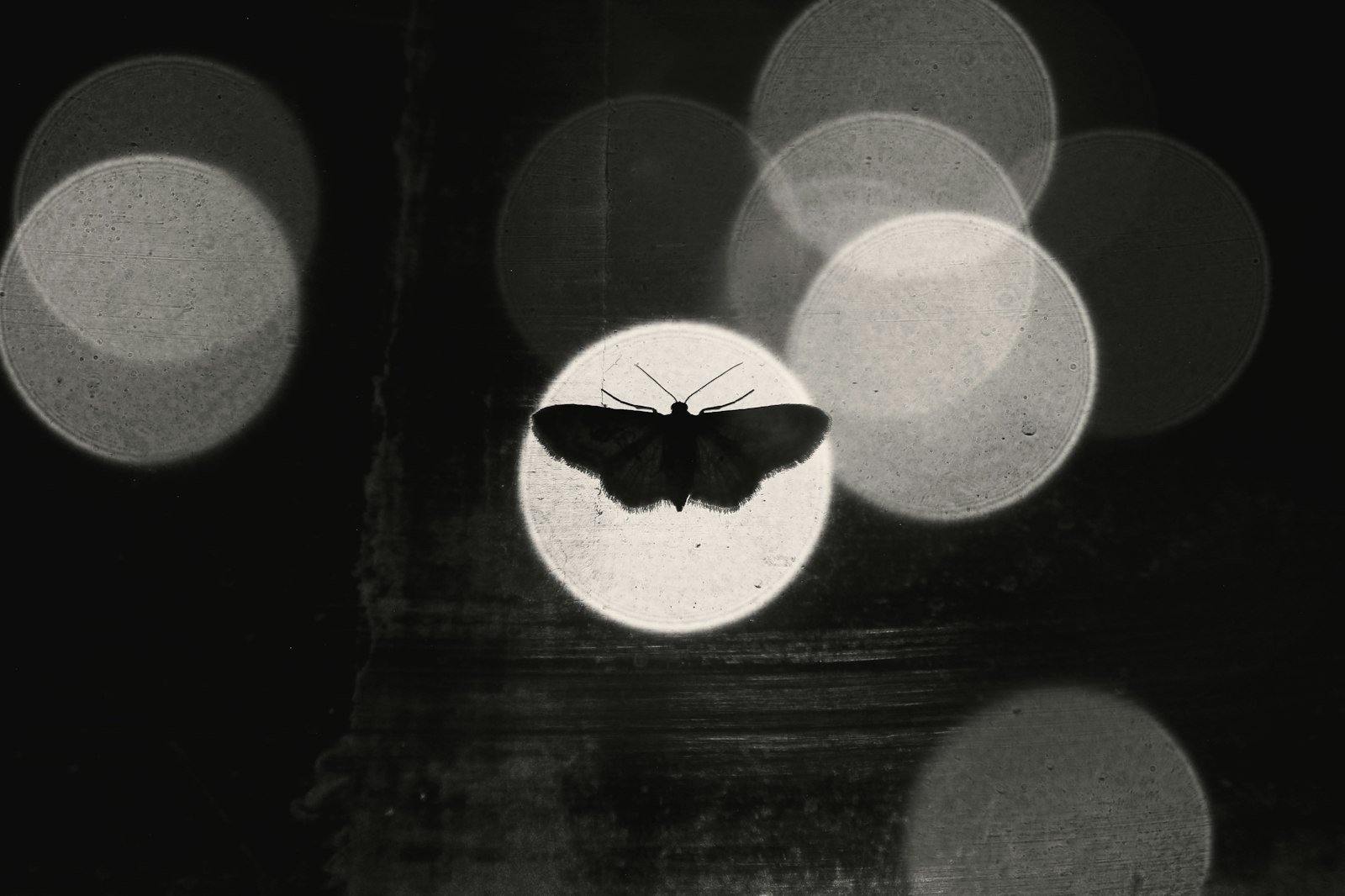
Turn on a porch light on a summer evening, and it won’t be long before moths begin to arrive. They circle the bulb, bump against it, and settle on nearby walls. The sight is so common that people rarely stop to ask why it happens. Yet the question of why moths are drawn to light has puzzled scientists for a long time.
Several explanations have been proposed over the years. Some have been set aside, while newer research has offered a clearer answer. Understanding this behavior also helps explain why artificial light can be a problem for moths and the ecosystems that depend on them.
A Familiar Mystery
Moths gathering at lights is one of the most recognizable insect behaviors. It happens near streetlights, stadiums, storefronts, and home windows. Many other night-flying insects show similar behavior, including some beetles, flies, and lacewings.
For a long time, people assumed the answer was simple: moths like light. However, that idea doesn’t fully match what moths do. Many don’t fly straight to a bulb and land on it. Instead, they circle, stall, or crash in ways that suggest something is going wrong with their flight.
Scientists have tested several ideas to explain this pattern. Each one offers part of the picture.
The Moon Navigation Theory
One of the best-known explanations involves the moon. According to this idea, moths use the moon as a guide. By keeping the moon at a steady angle, a moth could fly in a straight line across the landscape.
Because the moon is so far away, its position barely changes during a short flight. A nearby light is different. If a moth tries to keep a porch light at a fixed angle, it would have to keep turning. That turning could pull it into a spiral toward the light.
This theory is appealing, but it has problems. Many moths don’t spiral inward the way the theory predicts. There’s also limited evidence that most moth species use the moon for navigation in the first place.
Other Early Explanations
Some people have suggested that moths are drawn to the heat of a light bulb. Older incandescent bulbs did give off warmth. However, moths also gather at cool light sources, so heat can’t explain the behavior on its own.
Another idea is that moths treat bright light as an escape route. In nature, the brightest direction is often the open sky. Flying toward it could help an insect get away from danger in dense vegetation.
A third suggestion is that some lights give off wavelengths that resemble light reflected by flowers. This could confuse moths searching for nectar.
None of these explanations fully accounts for the way moths behave near lights, which led researchers to look more closely.
What High-Speed Cameras Revealed
In 2024, researchers published a study that used high-speed and motion-capture cameras to track insects flying around artificial lights. The work took place both in the lab and in the field, allowing scientists to see flight behavior in fine detail.
The footage suggested a new explanation. Many flying insects instinctively keep their backs turned toward the brightest part of their surroundings. This reflex normally helps them stay level, since the sky is usually brighter than the ground.
A small, bright light near the ground breaks that rule. When an insect tilts its back toward the bulb, it can lose track of which way is up. The researchers observed insects orbiting lights, stalling as they climbed, and even flipping upside down. Rather than being attracted to the light, the insects appeared to be trapped by it.
Why Some Lights Attract More Moths
Not all lights affect moths equally. Many insects are especially sensitive to ultraviolet and blue light. Bulbs that give off a lot of these wavelengths tend to draw in more insects.
Warmer lights, such as those with amber or yellow tones, usually attract fewer moths. This is one reason some outdoor lighting now uses warmer colors.
Brightness and direction also matter. A light that shines outward or upward reaches more insects than one that points down toward the ground. Lights that stay on all night affect insects for many more hours than lights that switch off when not needed.
What Happens to Moths Near Lights
Getting stuck near a light can have serious consequences for a moth. Circling a bulb for hours uses energy that the insect would normally spend feeding or finding a mate.
Lights also make moths easy targets. Birds, bats, spiders, and other predators often learn to hunt near bright lights where insects gather. Some moths die from exhaustion or are unable to leave before sunrise, when daytime predators appear.
Moths that are drawn away from their normal habitat may also fail to lay eggs in the right places. Over time, these effects can reduce local moth populations.
The Wider Effects of Light Pollution
Artificial light at night, often called light pollution, affects more than individual moths. Many moths are important pollinators, especially for plants that bloom after dark. When moths spend time near lights instead of visiting flowers, those plants may receive fewer visits.
Moths are also a key food source for many animals. Birds feed caterpillars to their chicks, and bats rely heavily on adult moths. A decline in moths can affect animals throughout the food chain.
Light pollution often works alongside other pressures, such as habitat loss and pesticide use. Together, these changes can have a large impact on insect communities.
How to Reduce the Impact at Home
Light pollution is one of the easier environmental problems to address. Small changes at home can make a real difference for moths.
Turning off outdoor lights when they aren’t needed is the simplest step. Motion sensors and timers can help keep lights off for most of the night. Shielded fixtures that point light downward limit how far it spreads.
Choosing warmer-toned bulbs can reduce the number of insects drawn in. Closing curtains at night also keeps indoor light from spilling outside.
Planting native flowers and host plants gives moths more reasons to stay in natural areas. A darker, plant-rich yard supports moths and the animals that depend on them.
Frequently Asked Questions
Why do moths fly around lights?
Recent research suggests moths and other insects keep their backs turned toward the brightest light. A nearby bulb confuses this reflex, causing them to circle, stall, or flip over.
Do moths use the moon to navigate?
Some insects may use light from the sky for orientation, but there’s limited evidence that most moths navigate by the moon.
What color light attracts the fewest moths?
Warmer lights, such as amber or yellow bulbs, generally attract fewer moths than bright white or blue-toned lights.
Is artificial light harmful to moths?
Yes. Artificial light can exhaust moths, expose them to predators, and interfere with feeding, mating, and pollination.
How can I help moths at home?
Turn off outdoor lights when possible, use warm-toned and shielded fixtures, and plant native flowers to support moths.