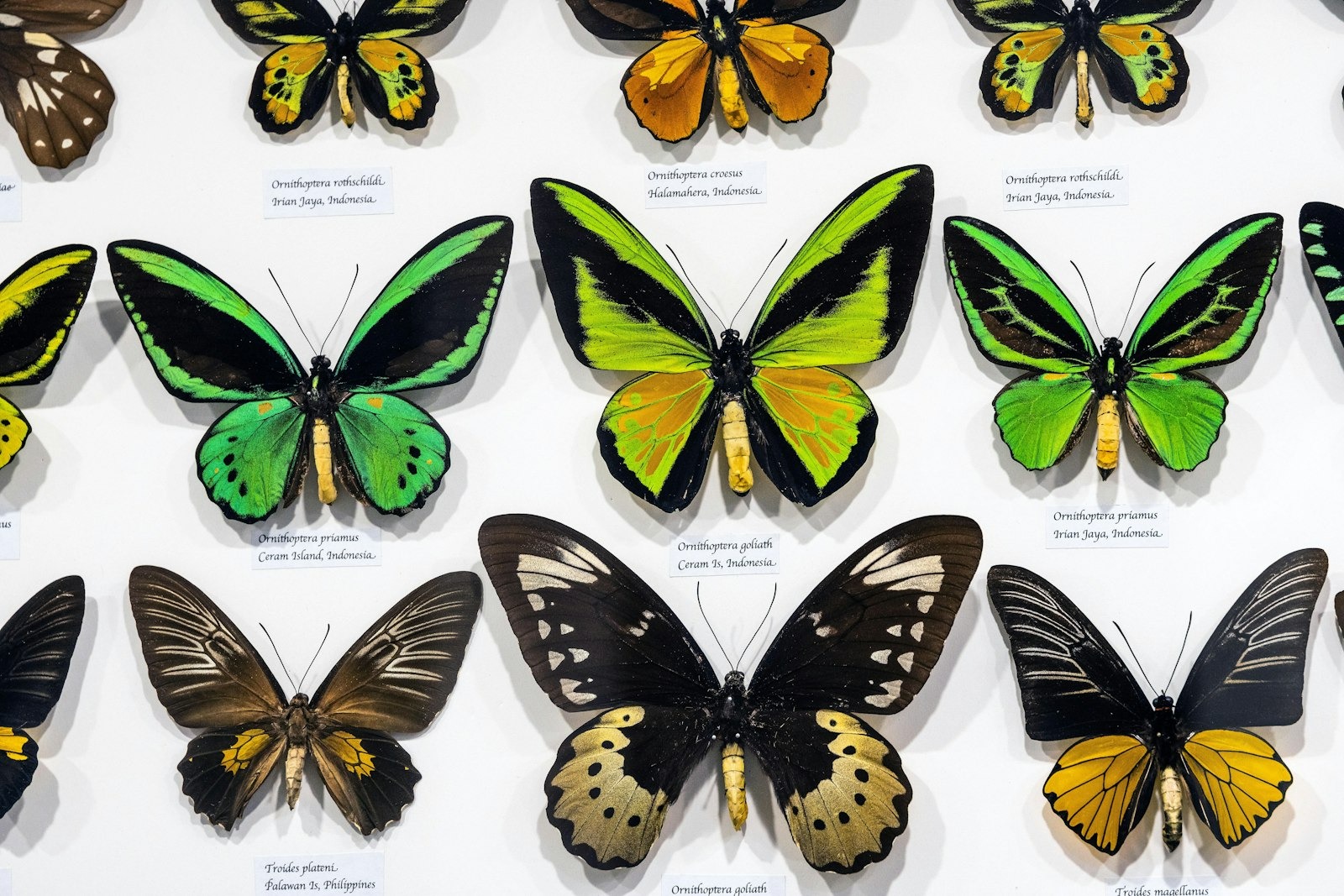
When most people picture a natural history museum, they think of exhibit halls and display cases. Behind those public spaces, however, many museums hold far larger collections that visitors rarely see. At a butterfly museum or research collection, rows of cabinets can hold millions of butterflies and moths, each one carefully preserved and labeled.
These collections aren’t simply storage. They’re working scientific libraries. Researchers use them to identify species, trace evolutionary history, study genetics, and track how the natural world is changing. A single drawer may hold decades of scientific evidence.
What Happens Behind the Scenes
The public areas of a museum show only a small portion of what it holds. Most specimens live in climate-controlled rooms where temperature and humidity are carefully managed. These conditions protect fragile insects from damage, mold, and pests.
Specimens are usually arranged by family, genus, and species. This organization allows scientists to quickly find related insects and compare them side by side. Many collections are sorted further by region, so researchers can study how a species varies from one place to another.
Museum staff handle much of the daily work. Collection managers track specimens, maintain records, and prepare material for visiting researchers. Volunteers and students often help with sorting, labeling, and entering data.
Every Specimen Tells a Story
A preserved butterfly might look like a simple display piece, but it carries valuable information. Each specimen typically has a small label listing where it was collected, when, and by whom.
That label turns the insect into evidence. It shows that a particular species lived in a specific place on a specific date. When thousands of these records are combined, they reveal patterns across time and geography.
The importance of a specimen can grow over the years. A butterfly collected decades ago may have seemed ordinary at the time. Today it might be one of the only records showing that a species once lived in an area where it no longer appears.
How Butterflies and Moths Are Preserved
Museums use several methods to preserve Lepidoptera. Many specimens are pinned with their wings spread flat, which makes it easy to study wing shape and color patterns.
Others are stored with their wings folded inside small paper envelopes. This method, often called papering, saves space and protects delicate wings during storage or shipping. Some papered specimens remain in their envelopes for years before being spread for study.
Collections may also keep caterpillars, pupae, and eggs. These are often preserved in fluid. Studying every life stage helps scientists understand how a species grows and develops, not just how the adult looks.
Naming New Species
One of the most important roles of a natural history collection is helping scientists name and define species. When researchers describe a new species, they select a reference specimen called a type specimen.
The type specimen serves as the official example of that species name. If questions arise later about how to identify the species, scientists can return to the type and compare it directly.
Collections also remain a source of new discoveries. It’s not uncommon for researchers to find an undescribed species sitting in a museum drawer. Some of these insects were collected many years earlier but were never studied closely. With more than 160,000 known species of butterflies and moths, and many more still unnamed, collections give scientists the chance to compare large numbers of insects in one place.
Unlocking DNA From Old Specimens
Advances in genetics have opened new possibilities for museum collections. Scientists can now extract DNA from preserved insects, including some that are many years old.
This DNA helps researchers build family trees that show how different butterflies and moths are related. Collecting fresh samples of every species in the wild would be nearly impossible, especially for rare or remote species. Museum specimens make it possible to study a far wider range of insects.
Genetic work can also reveal hidden diversity. Two butterflies that look almost identical may turn out to be separate species once their DNA is compared.
Tracking Change Over Time
Because each specimen records a time and place, large collections act as long-term archives of biodiversity. Comparing older specimens with recent ones helps scientists see how species have changed.
Researchers may look for shifts in where a species lives. Some butterflies have moved to higher elevations or new regions as conditions have changed. Collection records can also show whether species now appear earlier or later in the year.
Physical traits can change too. Scientists sometimes compare wing size, coloration, or other features across decades. These differences may reflect changes in climate, food plants, or habitat.
Studying Human Impacts on Insects
Collections provide a baseline for understanding how people affect insect populations. Habitat loss, pesticide use, artificial light at night, and climate change can all influence where butterflies and moths live and how many survive.
Without historical records, it would be difficult to know what has changed. A museum collection can show which species lived in a region before a forest was cleared or a city expanded.
This information helps conservation groups decide where to focus their efforts. It can also guide habitat restoration by showing which species once lived in an area.
Bringing Collections Online
Many museums are now digitizing their collections. Staff photograph specimens and enter label information into searchable databases. Some projects capture high-resolution images that show fine details of wings and scales.
Digitization allows researchers around the world to study specimens without traveling. It also helps connect records from many institutions, making it easier to see large-scale patterns.
The public benefits as well. Online collections let students, teachers, and nature enthusiasts explore specimens that were once only available to scientists.
Visiting a Butterfly Collection
Many natural history museums offer ways for the public to learn about their collections. Some host behind-the-scenes tours, lectures, or open houses. Others offer volunteer programs that let people help with specimen care or data entry.
Live butterfly exhibits are another way to connect with Lepidoptera. Seeing living butterflies up close can make a visit to the preserved collection even more meaningful.
Each drawer in a research collection holds part of the story of life on Earth. Together, millions of specimens help scientists understand where butterflies and moths came from and where they may be headed.
Frequently Asked Questions
Why do museums keep so many butterfly specimens?
Large collections allow scientists to compare many individuals across regions and time periods. This helps them identify species, study variation, and track changes in biodiversity.
What is a type specimen?
A type specimen is the reference example used when a species is first named. It serves as the official standard for identifying that species.
Can scientists get DNA from old butterfly specimens?
Yes. Modern techniques allow researchers to extract DNA from many preserved specimens, including some that were collected years ago.
How are butterfly specimens stored?
Specimens may be pinned with wings spread, stored folded in paper envelopes, or preserved in fluid. Collections are kept in controlled conditions to prevent damage.
Can the public see butterfly museum collections?
Many museums display part of their collections and offer tours, events, or online databases that let the public explore more of what they hold.