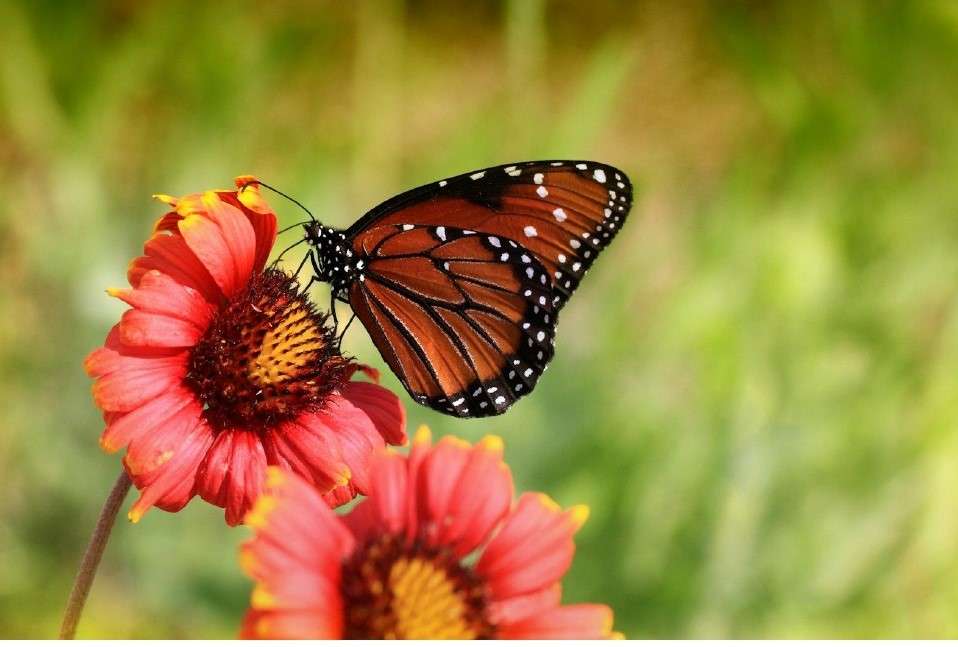
A butterfly resting on a garden flower looks like it belongs there. Yet its family history stretches back tens of millions of years, long before gardens, or people, existed. The origin of butterflies is a puzzle scientists have worked on for generations, and new tools have finally brought much of the picture into focus.
Tracing that history means following several kinds of clues. Fossils, DNA, and the plants caterpillars eat all hold pieces of the story. When researchers put those pieces together, a clearer picture emerges of when butterflies first appeared, where they lived, and how they spread around the world.
Butterflies Are Part of the Moth Family Tree
Butterflies and moths belong to the same insect order, Lepidoptera. Many people think of them as two separate groups that developed side by side. In reality, butterflies are a branch that grew out of the moths.
That means every butterfly alive today descends from moth ancestors. Scientists sometimes describe butterflies as a group of moths that adapted to life during the day. Their bright colors, club-tipped antennae, and daytime habits all developed after they split from their nighttime relatives.
Understanding this relationship changes the question. Instead of asking where butterflies came from as a separate group, scientists ask when and where one lineage of moths began evolving into the insects we now call butterflies.
The Closest Relatives of Lepidoptera
Looking further back, Lepidoptera have their own close relatives. Their nearest living cousins are caddisflies, insects whose larvae live in water and often build protective cases from sand, pebbles, or plant pieces.
Adult caddisflies look a little like small moths. Instead of scales, however, their wings are covered in tiny hairs. This difference helps explain the name Lepidoptera, which comes from Greek words meaning “scale wing.”
The shared ancestry between caddisflies and Lepidoptera suggests that the earliest members of the group lived in a world very different from today’s. Flowering plants were not yet widespread, and the landscape was dominated by ferns, conifers, and other ancient plants.
What Fossils Can and Can’t Tell Us
Fossils offer direct evidence of life in the past. Unfortunately, butterflies are among the hardest insects to find in the fossil record. Their bodies are soft and their wings are fragile, so they rarely survive long enough to be preserved.
The butterfly fossils that do exist are rare and valuable. Some are preserved in amber, while others appear in fine-grained rock that captured unusual detail. Each fossil can be dated, which gives scientists a minimum age for the group it belongs to.
Researchers use these fossils as calibration points. They anchor timelines built from other evidence, especially DNA, to known moments in Earth’s history. Gaps in the fossil record don’t mean butterflies were missing. They usually mean the conditions for preservation weren’t right.
Reading Butterfly History in DNA
Every living butterfly carries a record of its ancestry in its genes. By comparing DNA across many species, scientists can build a family tree, known as a phylogeny, that shows how different groups are related.
When that family tree is combined with fossil dates, it also becomes a timeline. Scientists can estimate when different branches split and how quickly new groups appeared.
In 2023, a large international study published in Nature Ecology & Evolution used DNA from more than 2,000 butterfly species to build one of the most complete butterfly family trees to date. The study included all butterfly families and used rare fossils to date the tree.
When the First Butterflies Appeared
According to that 2023 study, butterflies first appeared about 100 million years ago, during the Cretaceous period. This was a time when dinosaurs still roamed the Earth and flowering plants were beginning to spread.
The study also found that by about 66 million years ago, when the non-avian dinosaurs disappeared, nearly all modern butterfly families were already present. In other words, the major branches of the butterfly family tree were established long before the age of mammals.
This timing places the rise of butterflies alongside one of the biggest changes in plant history. As flowering plants diversified, they created new food sources and new habitats that butterflies could use.
Where the First Butterflies Lived
The same research pointed to a surprising starting point. The first butterflies likely appeared in what is now Central and western North America.
At that time, the continents were arranged differently than they are today. North America was separated from South America, and land bridges connected some regions that are now divided by ocean.
From their North American origins, butterflies spread outward. The study found evidence that they crossed into Asia over the Bering land bridge, a stretch of land that once connected Alaska and Siberia. From there, they continued spreading until butterflies reached nearly every continent.
The First Caterpillars Ate Beans
Plants play a central role in the butterfly story. Caterpillars often feed on only a small number of plant species, so the history of butterflies is closely tied to the history of their host plants.
The 2023 study compared host plant records with the butterfly family tree. The researchers found that plants in the bean family were the ancestral hosts for nearly every butterfly family. The ancestor of all butterflies likely fed on legumes as well.
Over time, many butterfly groups shifted to new plant families. Some moved to grasses, others to citrus, milkweeds, or mustards. These shifts opened new opportunities and may help explain why butterflies became so diverse.
How Butterflies Became So Diverse
Today there are roughly 19,000 known species of butterflies. That diversity developed through a combination of geography, plant relationships, and changes in behavior.
Moving into new regions allowed populations to become isolated. Over many generations, isolated groups could develop into separate species. Switching to new host plants had a similar effect, since caterpillars adapted to different plants often became distinct lineages.
Flying during the day also mattered. Daytime activity allowed butterflies to use color and visual signals for mating and defense. That shift helped create the wide range of wing patterns seen today.
Why Butterfly Origins Still Matter
Knowing where butterflies came from is more than a history lesson. It helps scientists understand how butterflies may respond to change today.
If a group has depended on a certain type of plant for millions of years, losing that plant could put the group at risk. Understanding past movements across continents can also help researchers predict how species might shift as climate patterns change.
The next time a butterfly lands nearby, it’s worth remembering the long journey behind it. Its ancestors likely fed on bean plants in ancient North America and spread across the globe long before humans arrived.
Frequently Asked Questions
Did butterflies evolve from moths?
Yes. Butterflies are a specialized branch of the moth family tree. All butterflies share moth ancestors.
How old are butterflies?
Research published in 2023 suggests butterflies first appeared about 100 million years ago, during the Cretaceous period.
Where did the first butterflies live?
The same research indicates the first butterflies likely lived in what is now Central and western North America.
What did the first butterfly caterpillars eat?
Evidence suggests the earliest butterfly caterpillars fed on plants in the bean family, also known as legumes.
Why are butterfly fossils so rare?
Butterflies have soft bodies and fragile wings. These features make them unlikely to be preserved, so butterfly fossils are uncommon.