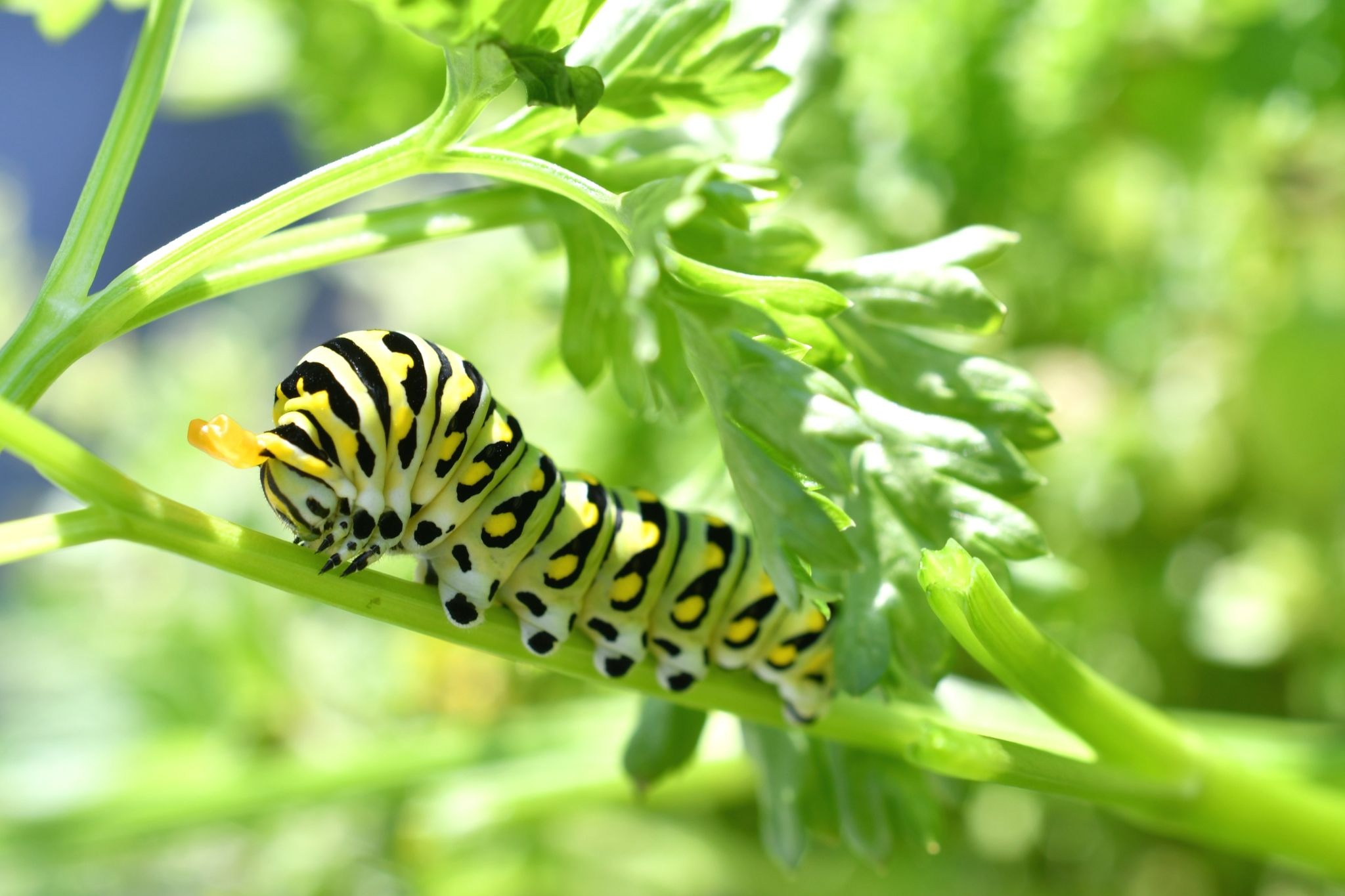
The transformation from caterpillar to butterfly is one of the most remarkable processes in the natural world. A crawling larva with chewing mouthparts, many body segments, and no visible wings becomes a delicate flying adult built for movement and reproduction. Although the change looks almost magical, it follows a precise biological sequence shaped by millions of years of evolution.
Butterflies and moths belong to the insect order Lepidoptera. Every species in this group experiences complete metamorphosis, a life cycle that includes four distinct stages: egg, larva, pupa, and adult. Each stage has a different structure, purpose, and relationship with the environment.
The caterpillar stage centers on eating and growth. The adult stage centers on dispersal, mating, and reproduction. Between them lies the pupa, where one body plan is reorganized into another. Understanding this process reveals how carefully each stage supports the survival of the species.
The Life Cycle Begins with a Carefully Placed Egg
Metamorphosis begins when an adult female chooses a place to lay her eggs. This decision is critical because newly hatched caterpillars often cannot travel far. The female must locate a plant that will provide suitable food as soon as the larvae emerge.
These plants are called host plants. Different Lepidoptera species depend on different hosts. Some caterpillars can eat several related plants, while others survive only on one species or plant family. A poor choice may leave the hatchlings without the food they need.
Female butterflies and moths inspect leaves using sight, smell, and chemical sensors on their legs and antennae. They may land, touch the plant, and test its surface before laying an egg. This behavior helps them recognize the correct plant even when several species grow nearby.
Eggs vary greatly in size, color, and shape. Some are round and smooth, while others are ribbed, flattened, or cone-shaped. Many blend into the plant surface, making them difficult for predators to find.
When development is complete, the caterpillar cuts or chews through the eggshell. In many species, it eats the empty shell afterward. This first meal provides nutrients and removes evidence that might attract predators.
The Caterpillar Stage Is Built for Rapid Growth
The newly hatched caterpillar may be tiny, but it is designed to grow quickly. Its main task is to eat, store energy, and prepare for transformation. Nearly every part of its body supports this purpose.
A caterpillar has a hardened head, strong chewing mouthparts, three pairs of true legs, and several fleshy prolegs. The prolegs help it grip leaves, stems, and branches. Small hooks on these structures provide extra stability while feeding or moving.
Growth creates a physical problem because the outer skin cannot expand forever. Caterpillars solve this by molting. They shed their old skin and replace it with a larger one. The growth period between molts is called an instar.
Many caterpillars pass through several instars before becoming fully grown. Their appearance may change after each molt. Colors, hairs, spines, and patterns can become more noticeable as the larva develops.
The digestive system processes large amounts of food during this stage. Nutrients support immediate growth and are also stored for later use. These energy reserves become essential during pupation, when the insect cannot feed.
Caterpillars face intense pressure from birds, wasps, spiders, reptiles, and other predators. Their defenses include camouflage, warning colors, unpleasant chemicals, hairs, spines, and deceptive body shapes.
Despite these dangers, the caterpillar must continue feeding. Its entire future depends on gaining enough mass and energy to complete the next stage.
The Final Instar Prepares for a Complete Transformation
When a caterpillar reaches its final instar, its behavior begins to change. Feeding slows or stops, and the larva searches for a protected place. It may move away from its host plant and travel across the ground, along branches, or into leaf litter.
Butterfly caterpillars usually form a chrysalis. Many attach a silk pad to a stable surface and anchor themselves with tiny hooks. Some hang head downward, while others secure the body with a silk support.
Moth caterpillars often spin cocoons, although not every moth does so. A cocoon is a protective silk covering around the pupa. Plant fibers, leaves, hair, or soil particles may be added for camouflage and strength.
Before pupation, major internal changes begin. Hormones control the timing of molting and transformation. Juvenile hormone maintains larval features during earlier stages. When its level falls, other hormones trigger the transition toward the pupa.
The caterpillar then sheds its final larval skin. Beneath it lies the newly formed pupa. At first, the pupa may be soft and vulnerable. Its outer covering soon hardens and provides protection.
The stillness of the pupa can make it appear inactive. In reality, one of the most complex biological reorganizations in nature is underway.
Inside the Pupa, the Body Is Rebuilt
Inside the chrysalis or cocoon, the caterpillar’s body does not simply grow wings. Many larval tissues break down, while specialized groups of cells guide the construction of adult structures.
These groups are commonly called imaginal discs. They were present during the larval stage but remained small and inactive. During pupation, they grow rapidly and form the adult wings, legs, eyes, antennae, and reproductive organs.
Some larval tissues are broken into nutrients that support this development. Other systems remain and are reorganized. The transformation is therefore both destructive and constructive.
The adult digestive system becomes suited to a different diet. Caterpillars use chewing mouthparts, while many adult butterflies and moths use a coiled proboscis to drink nectar or other liquids.
The nervous system also changes. The adult must process flight, visual information, scent signals, courtship, and navigation. Muscles are reorganized to power the wings and control movement.
Wing development is especially complex. The wings form as folded structures inside the pupa. Veins, membranes, and scale-producing cells develop before emergence.
The length of the pupal stage varies widely. Warm temperatures may speed development, while cold conditions may slow it. Some species remain pupae for only a short period, while others stay dormant through winter.
Emergence Marks the Beginning of Adult Life
When development is complete, the adult begins breaking through the pupal covering. This process is called eclosion. The emerging butterfly or moth looks soft, damp, and compressed.
Its wings are initially small and folded. The insect pumps fluid through the wing veins, causing the wings to expand. It then rests while they dry and harden.
This stage is delicate. The adult cannot fly until the wings reach full size and strength. Disturbance or damage during this period may prevent normal flight.
Once ready, the adult leaves the emergence site. Its priorities differ sharply from those of the caterpillar. The adult must find food when needed, avoid predators, locate mates, and reproduce.
Many butterflies feed on flower nectar. Some moths visit night-blooming flowers, tree sap, fruit, or other liquid sources. However, certain adult moths do not feed at all. They live on stored energy from the larval stage.
The wings allow adults to disperse across much larger areas than caterpillars. This helps them find new habitats, food sources, and partners. Some species remain local, while others migrate over long distances.
Courtship may involve color displays, scent signals, flight patterns, or physical movements. After mating, females begin searching for suitable host plants, and the cycle starts again.
Adult life may last only days in some species and several months in others. Its success is measured largely by reproduction rather than continued growth.
Why Complete Metamorphosis Is Such a Powerful Survival Strategy
Complete metamorphosis separates the needs of young and adult insects. Caterpillars and adults often use different foods, habitats, and behaviors. This reduces direct competition between life stages.
The caterpillar can specialize in feeding and growth without needing wings or reproductive structures. The adult can specialize in movement and reproduction without carrying the heavy feeding equipment of the larva.
Each stage can also survive environmental pressures in a different way. Eggs may resist cold or drought. Caterpillars can exploit seasonal plant growth. Pupae can remain dormant, while adults can move to new locations.
Metamorphosis also creates several opportunities for adaptation. Natural selection can shape larval defenses, pupal camouflage, adult wing patterns, and reproductive behavior independently.
This division of roles has helped Lepidoptera occupy many environments. Butterflies and moths live in tropical forests, deserts, mountains, wetlands, grasslands, farms, and cities.
Their transformation also connects them closely with plants. Caterpillars depend on host plants, while many adults pollinate flowers. Each generation therefore links feeding, reproduction, and plant ecology.
The journey from caterpillar to butterfly is not a simple change in appearance. It is a complete shift in anatomy, behavior, diet, movement, and purpose.
A leaf-eating larva becomes a flying adult through a carefully timed sequence of growth, breakdown, rebuilding, and emergence. This astonishing process shows how evolution can divide one life into distinct stages, each perfectly suited to a different task.