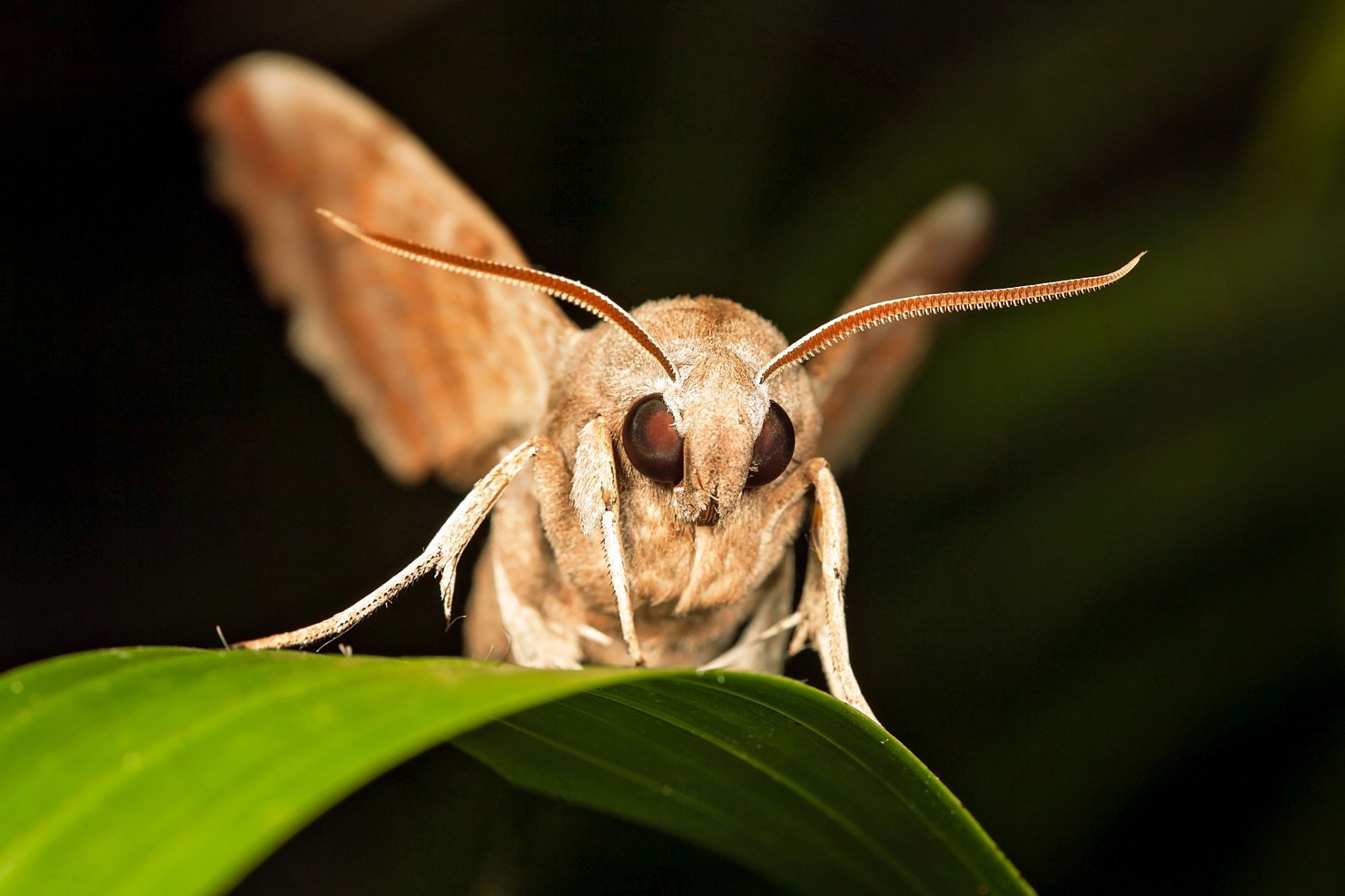
Moths often live in the shadow of butterflies, yet they are among the most diverse insects on Earth. Many people notice them only when they gather near outdoor lights or enter a dark room. However, their hidden lives include remarkable forms of navigation, communication, camouflage, feeding, migration, and survival.
Moths belong to the insect order Lepidoptera, which also includes butterflies. Their wings are covered with thousands of tiny scales. These scales create colors, patterns, textures, and reflective surfaces.
Most moth activity happens after sunset. While people sleep, moths search for food, locate mates, avoid predators, and travel across large areas. Some pollinate flowers, while others become essential food for birds, bats, and other animals.
Moths are not simply brown insects attracted to lamps. Some display bright colors, metallic markings, transparent wings, or patterns that resemble leaves and tree bark. Exploring their secret lives reveals a complex nighttime world that often goes unnoticed.
Moths Are More Diverse Than Most People Realize
Moths greatly outnumber butterflies in both species and variety. They range from tiny insects that are difficult to notice to large species with broad wings and heavy bodies. Their shapes, colors, behaviors, and habitats differ widely.
Moths live in forests, grasslands, deserts, wetlands, farms, gardens, and cities. Some survive in cold mountain regions, while others thrive in tropical environments. Their success comes from their ability to use many plants and adapt to different climates.
Although most moths are active at night, some fly during the day. These day-flying species may be mistaken for butterflies because they often have bright colors and quick movements.
Several physical features can help distinguish moths from butterflies. Moths often have feathery or thread-like antennae. Butterflies usually have thin antennae with club-shaped ends.
Many moths also have thicker and hairier bodies. This body covering helps them retain warmth during cool nights. However, these differences do not apply to every species.
Resting position may provide another clue. Some moths spread their wings flat, while others fold them over their bodies like a roof. Butterflies often hold their wings upright when resting.
Moth wings contain microscopic scales that provide more than color. These scales may help protect the wings and body. If a predator grabs a moth, loose scales can rub away and help the insect escape.
The enormous variety of moths reflects millions of years of adaptation. Each species has developed a close relationship with its habitat, food plants, predators, and seasonal conditions.
Their Nighttime Senses Are Highly Advanced
Moths must navigate in conditions where vision is limited. They rely on sensitive eyes, antennae, body hairs, and specialized hearing organs to survive after dark.
Their compound eyes can detect movement and low levels of light. Although moths do not see the world exactly as humans do, they respond quickly to changes in brightness. This ability helps them locate flowers, avoid obstacles, and escape predators.
A moth’s antennae are among its most powerful tools. They can detect extremely small amounts of chemicals moving through the air. These chemicals provide information about food, plants, danger, and possible mates.
Female moths release chemical signals known as pheromones. Male moths use their antennae to detect these signals. In some species, males can follow a scent over a considerable distance.
Feathery antennae provide a large surface area for collecting scent particles. They are especially common among male moths that depend heavily on chemical communication.
Moths also use smell to find food and suitable places for egg laying. They can detect flower scents, plant chemicals, fermenting fruit, and tree sap. Female moths often inspect several plants before selecting one for their eggs.
Some moths possess hearing organs that detect the high-frequency calls of hunting bats. When a moth senses a nearby bat, it may turn sharply, drop toward the ground, or begin flying unpredictably.
Certain tiger moths produce clicking sounds when bats approach. These sounds may confuse the bat’s hunting system or warn that the moth tastes unpleasant.
Fine hairs on a moth’s body can also detect air movement. This sensitivity may warn the moth about approaching predators or sudden changes in wind.
Together, these senses allow moths to feed, reproduce, navigate, and escape danger in near darkness.
Moths Are Masters of Camouflage and Defense
Many moths survive by becoming almost invisible. Their wing patterns often match tree bark, dry leaves, lichen, stones, or soil. When they remain still, even nearby predators may fail to notice them.
Some species have markings that imitate cracks in bark, patches of moss, or shadows between leaves. Others resemble dead leaves, complete with vein-like lines, brown spots, and uneven edges.
Camouflage is especially valuable because many moths rest during the day. Choosing the correct background can keep a moth hidden from birds and other daytime predators for several hours.
However, not all moths depend on hiding. Some display bright warning colors that suggest they are toxic, unpleasant, or difficult to eat.
Certain species keep their brightest colors hidden while resting. When threatened, they suddenly spread their wings and expose red, orange, yellow, or blue markings. The unexpected flash may startle a predator and create time for escape.
Eyespots provide another defense. Large circular markings may resemble the eyes of an owl or another dangerous animal. A predator may hesitate or attack the wing instead of the moth’s body.
Some moths imitate insects that can sting. Clearwing moths may resemble wasps or hornets because they have transparent wings, narrow bodies, and bold markings. Predators may avoid them even though they cannot sting.
Moth caterpillars also use several defenses. Some are covered with hairs or spines, while others produce unpleasant chemicals. Certain caterpillars resemble twigs, stems, leaves, or bird droppings.
Other caterpillars hide inside rolled leaves or build protective cases from silk and plant material. They may carry these shelters as they move and feed.
These strategies show that moths are not defenseless insects. Their survival depends on appearance, behavior, chemical protection, and carefully selected hiding places.
Their Feeding Habits Are Surprisingly Complex
Many adult moths drink flower nectar through a long, tube-shaped mouthpart called a proboscis. They often visit flowers that open after sunset or release their strongest scents at night.
Night-blooming flowers commonly have pale colors that remain visible in low light. Their strong fragrance helps guide moths toward the nectar.
As moths move between flowers, pollen may attach to their bodies. They then carry it to other flowers. This makes many moths important nighttime pollinators.
Some plants depend heavily on moths for reproduction. These plants and their moth pollinators may develop close relationships over long periods.
Certain moths have extremely long proboscises that reach nectar hidden inside deep flowers. The moth gains access to food, while the flower receives help with pollination.
However, not every adult moth feeds. Some species emerge with all the energy they need stored from the caterpillar stage. Their adult mouthparts may be reduced or absent.
These moths live for a short period and focus almost entirely on finding mates and reproducing.
Other moths feed on tree sap, overripe fruit, minerals in damp soil, or animal waste. These sources provide sugars, salts, and nutrients that may not be available from flowers.
Moth caterpillars show even greater dietary variety. Most eat leaves, although each species may depend on certain plants. Some caterpillars tunnel inside stems, fruit, seeds, wood, or roots.
A few moth species can damage stored food or natural fabrics. However, these pests represent only a small part of moth diversity.
The caterpillars, not the adult moths, cause holes in clothing. They feed on animal-based materials such as wool, fur, feathers, and silk.
Most moth species never enter homes or damage belongings. Instead, they quietly support natural food webs and plant reproduction.
Moths Experience Dramatic Changes and Long Journeys
Like butterflies, moths undergo complete metamorphosis. Their life cycle has four stages: egg, caterpillar, pupa, and adult.
Female moths usually lay their eggs on or near plants that their caterpillars can eat. Some lay individual eggs, while others place them in groups. Choosing the correct location is essential because newly hatched caterpillars may not travel far.
The caterpillar stage focuses on feeding and growth. As a caterpillar becomes larger, it sheds its skin several times. During this period, it stores energy for transformation and adulthood.
When fully grown, the caterpillar enters the pupal stage. Some species spin silk cocoons, while others form pupae in soil, leaf litter, tree bark, or protected cracks.
Inside the pupa, the insect’s body changes completely. Wings, antennae, legs, and adult organs develop before the moth emerges.
The timing of this cycle varies between species. Some moths produce several generations within one year. Others require a full year or longer to complete their development.